
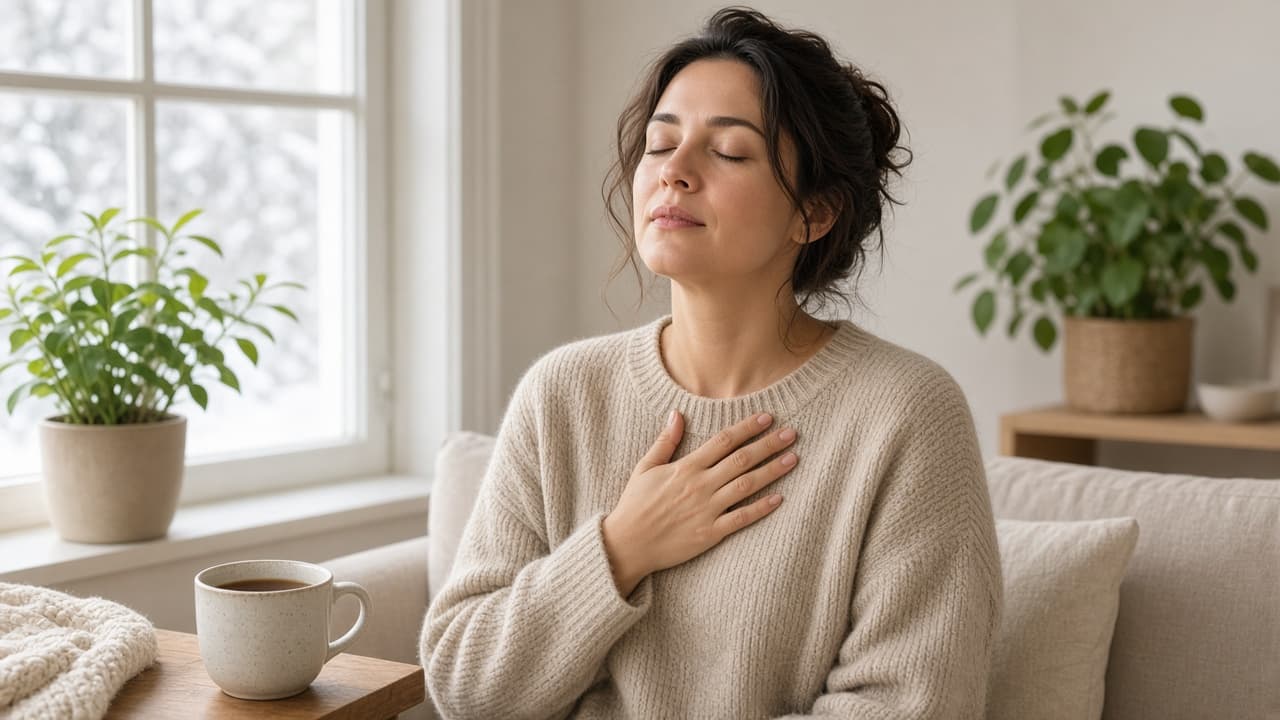
<p>Have you ever noticed how your shoulders drop after a long exhale? Or how a warm, familiar voice can settle you faster than any argument? A big part of that shift is the <strong>vagus nerve</strong>, the longest cranial nerve, linking the brain with the heart, lungs and gut. In this guide to <strong>nervous system regulation</strong> we explain what the vagus nerve is, why it matters for feeling safe, and share <strong>6 simple vagus nerve exercises</strong> you can do at home, at your desk or in the car before an important meeting.</p><p><em>Important: these exercises are general relaxation practices and are not a substitute for medical advice, diagnosis or treatment. If you have heart, breathing or other health conditions, or ongoing anxiety, please speak to your doctor first.</em></p>
<h2>What is the vagus nerve?</h2><p>The name comes from the Latin word "vagus", meaning "wandering", and it fits: the nerve winds from the brainstem through the neck all the way to the abdomen. It is a key part of the parasympathetic nervous system, often called the "rest and digest" system. When this system leads, breathing slows, the heartbeat settles and the body can shift into recovery.</p><p>Its counterpart is the sympathetic system, the "fight or flight" response. It helps when we need to act fast. The trouble starts when we stay on alert for too long: deadlines, worries, noise and endless phone notifications. That is when many of us feel tense, irritable and exhausted all at once, sometimes described as a dysregulated nervous system.</p>
<h2>Why nervous system regulation is trending</h2><p>Searches for "nervous system regulation exercises" and "vagus nerve reset" have grown fast across Europe, as people look for simple, body-based ways to return to balance. Vagus nerve exercises are not a magic fix, but they are a gentle reminder to the body that right now it is safe. Many people find that a short daily practice helps them settle more quickly after a stressful moment and wind down more easily at night.</p><p>If this sounds familiar, you may also like our article on <a href="https://zeen-connect.com/article/burnout-symptoms?lng=en">burnout symptoms</a> and our guide to <a href="https://zeen-connect.com/article/notranjimir?lng=en">calming the nervous system</a>.</p>
<h2>6 simple vagus nerve exercises</h2><h3>1. The longer exhale (4–6 breathing)</h3><p>Breathe in through your nose for a count of 4, then breathe out slowly for a count of 6. Continue for 5 minutes. An exhale that is longer than the inhale is one of the simplest calming signals we can give the body. To go deeper, read our article on <a href="https://zeen-connect.com/article/conscious-breathing?lng=en">conscious breathing</a>.</p><h3>2. Humming and singing</h3><p>The vagus nerve runs close to the vocal cords and throat, which is why many people feel calmer when they hum, sing or chant a long "mmm" or "om". Close your mouth, breathe in, and hum on the out-breath for as long as feels comfortable. Repeat 5 to 10 times and notice the vibration in your chest and head.</p><h3>3. Cool water on the face</h3><p>A few seconds of cool water on your face, or a cool cloth on your forehead and cheeks, helps many people step out of a spiral of thoughts. Start gently with lukewarm water and make it cooler over time. No ice baths needed: a short, pleasant cue is enough.</p><h3>4. Gentle neck and ear massage</h3><p>Use soft circular movements to massage the area behind your ears, the sides of your neck (never with strong pressure) and your outer ears. Breathe slowly. It takes 2–3 minutes and is a lovely ritual before sleep.</p><h3>5. The eye-gaze release</h3><p>Interlace your fingers behind your head. Without turning your head, look as far to the right as you can and hold for 30–60 seconds, until you feel the urge to yawn, swallow or take a deeper breath. Repeat on the left. This simple exercise from somatic approaches helps many people release tension in the neck and shoulders.</p><h3>6. Hand on heart and safe connection</h3><p>Place one palm on your chest and the other on your belly, close your eyes and follow your breath for a few minutes. You might quietly tell yourself, "Right now, I am safe." Because our nervous system is social, a talk with someone we trust, a hug or a walk in nature can be just as soothing.</p>
<h2>Build your own nervous system reset routine</h2><ul><li><strong>Morning:</strong> 3 minutes of 4–6 breathing with your first coffee or tea.</li><li><strong>During the day:</strong> three long exhales or one minute of humming each time you switch tasks.</li><li><strong>Evening:</strong> neck and ear massage plus hand on heart before bed.</li></ul><p>Consistency matters more than length. Five minutes a day that you actually do beats an hour that only lives on your wish list.</p>
<h2>When you would like expert support</h2><p>Sometimes it is easier when an experienced practitioner guides us through breath and relaxation. Zeen Connect lists <a href="https://zeen-connect.com/en/breathwork">breathwork</a> sessions and practitioners who work with the body and breath. If you are curious about combining breathing with energy work, take a look at <a href="https://zeen-connect.com/astralni-dotik/energijska-terapija-aeh-97e406b9?lng=en">Astralni Dotik AEH</a>, where a session blends guided breathwork with energy therapy. For deep relaxation with frequencies, explore <a href="https://zeen-connect.com/ees-harmonija-telesa-in-srca/2h-ees-bio-skalarna-frekvencna-terapija-953ca780?lng=en">EES Harmonija telesa in srca</a>.</p>
<h2>Vagus nerve FAQ</h2><h3>How quickly will I notice anything?</h3><p>Many people feel slightly calmer after a few minutes of slow breathing or humming. A longer-lasting sense of steadiness usually comes with regular practice over several weeks.</p><h3>Are these exercises suitable for everyone?</h3><p>Most are very gentle. If you have low blood pressure or heart conditions, or feel dizzy during breathing exercises, practise seated and check with your doctor.</p><h3>Can I do them at work?</h3><p>Yes. The longer exhale and hand on heart can be done discreetly at your desk or right before a meeting.</p>
<h2>Your first step</h2><p>Pick the one exercise you like best and practise it every day this week. Your body will soon show you which path to calm is yours. When you want more, trusted therapists, workshops and open sessions are waiting for you on Zeen Connect.</p><p><strong>Are you a therapist?</strong> Present your services on Zeen Connect for free: <a href="https://zeen-connect.com/pr?lng=en">join as a provider</a>.</p><p>Zeen Connect team · info@zeen-connect.com</p>
25.11.2026
Redakcja: Zeen Connect · Zaktualizowano:
Nervous System Regulation: 6 Simple Vagus Nerve Exercises to Calm Your Body
Nervous system regulation made simple: 6 vagus nerve exercises, from longer exhales and humming to gentle neck massage, to help your body calm down.